Skate etiquette isn’t about following a set of rigid rules to a T. It’s about awareness.
A good skate sesh — whether it's held in a rink, hall, or pop-up space —relies on a shared, often unspoken understanding, and respect between skaters. When good etiquette is upheld, our skating experience [as a collective] feels effortless. It adds to the flow. When it falls to the way side, things become sketchy: unexpected [or uncontrolled] antics can so easily disrupt the order things. It can also put others at risk.
Most issues aren’t caused by bad intentions. They come from inexperience, distraction, ego or just not knowing what to look out for. Skate etiquette can be easily learned, but it is applied at its best with some experience.
Newer skaters should be open to understanding how things work in a given space, and paying attention to the more experienced skaters at play, then adjust themselves accordingly. Bear in mind that more experienced skaters also have more control over their wheels, so make allowances for this by reducing your speed and increasing your reaction times if your skate skills arnt quite there yet.
Awareness Comes Before Skill
You don’t need to be advanced to have good skate etiquette.
However, you do need to be aware.
Good awareness means:
-
Looking before you make your way on and off the rink/skate space, change direction, stop, start ...or make any kind of unexpected movement
-
Reading and gaging speed differences and your realistic stopping distance
-
Not assuming others will move out of your way, anticipate your next decision/move, or stop you from falling
-
Understanding how your movement affects the wider floor AND beginner skaters you may swoosh past at speed
I say this part loud and clear, skilled experienced skaters with poor awareness or limited considerstion for others can just as easily as beginners with limited skate skills. It's simple, beginners are often less adept at reading unfolding scenarios than it is for experienced skaters to anticipate or read beginner mishaps. But there also needs to be a level of consderation for others too.
Awareness is the real foundation of etiquette folks.
Order Exist For Good Reason
Most London skate spaces have an order to them:
-
Faster rhythm, speed and backwards skaters on the outside
-
Moderate paced/slower skaters just to the inside of the outside [or inside of the the faster skate flow]
-
Rhythm or jam skaters dancing and working out moves congegate in the middle
These aren’t rules imposed from above— they’re solutions skaters try to abide by inorder to maintain the flow, and maximise what they'd like to achieve safely — it really does improve the experience for everyone using the space. Cutting across lines, skating diagonally accross the floor, skating in the opposite direction to everyone else, making snazzy big manoeuvres without checking who's around them or stopping suddenly can break the order of things and significantly increases risk of injury to one ir more people [not to mention get peoples backs up].
If you want to change pace or direction, signal with your body language first or wait for a good moment — just read the space. Small glances and adjustments can go a long way.
The Middle Is Shared Space
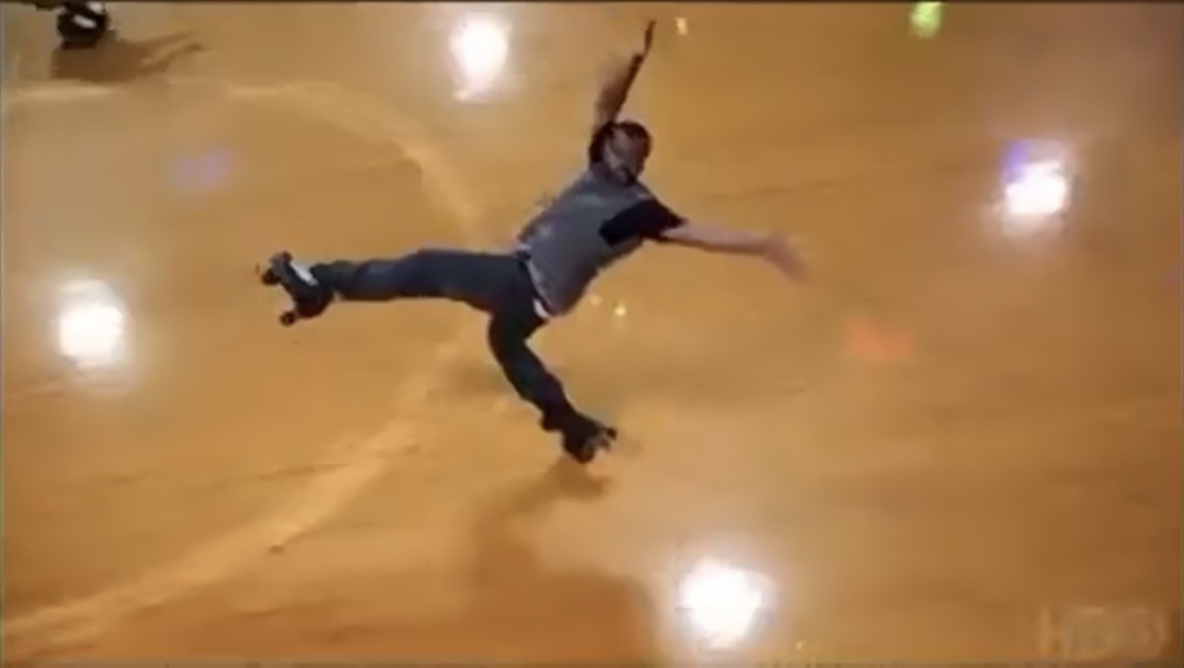
The centre of the skate space is usually a creative zone — an area designated for practising your footwork details, transitions moves, line dances with friends, and other creative exchanges. Just outside of this area is usually the best place to stop for a bit.
Remember though, it’s still shared space, not a private stage!
Using the middle responsibly means:
-
Not using it as a fast cut through from the outside
-
Noticing what's going on around you
-
Avoiding stopping and standing for long periods near the outside
-
Being prepared to relax your flow, or step completely out of the skating area when things get busy — especially if you just want to chat!
-
Accepting that sometimes the middle is not always the place for your extra flashy travelling moves— again, read the room
Respecting the centre of the rink keeps it productive and reduces the risk for everyone.
Speed Is A Responsibility [& High Speed Crashes Have A Price]!
Speed skating isn’t the problem—uncontrolled or inconsiderate speed is.
If you’re skating fast:
-
You have responsibility to control your roll and avoiding raking others out [especially less experienced skaters]
-
You should be predictable, not reactive [to give others a chance to anticipate your next move]
-
Be ready to adjust yourself if and when conditions change [they always do during busy skate sessions]. Expect the unexpected!
Speed can amplify mistakes. The faster you go, the more skill, control and awareness you'll need to keep things safe and enjoyable — for everyone! Just because others go fast through gaps effortlessly, it doesn't mean that you should give it a try. Try to know your limits— for everyones sake!
When collisions occur at high speed, especially when they're not anticipated by the person being slammed, the consequences can be ....well, painful to say the least! I know skaters who have stopped skating or taken months out after being injured by the reckless skating of others — so use your judgement well.
Stopping Still On The Floor
One of the most frequent rookie errors to make during a skating session is stopping suddenly while skating around the outside.
If you need to:
-
Adjust your skates or outfit
-
Catch your breath
-
Talk to a friend
-
Check your phone
-
Watch or film other skaters
Move to the middle or exit the skating area before making your move. Even a brief pause in the wrong place can cause an considerable issue.
Beginners Belong Here Too
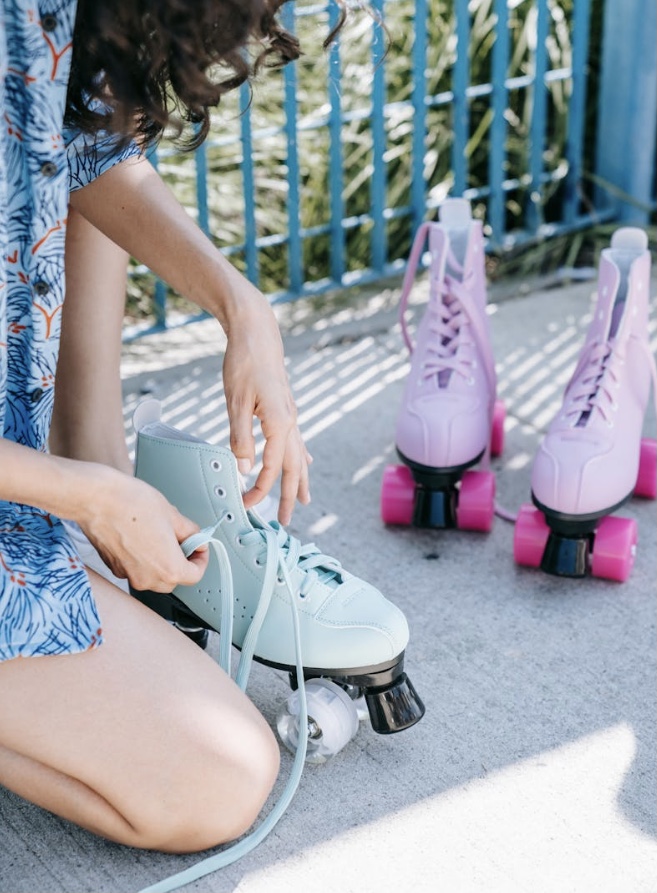
We all started out as beginners.
Good etiquette goes both ways:
-
Experienced skaters should skate considerstely and lead by example
-
Newer skaters should observe the order of things, ask questions, stay predictable and consider the potential impact of their next move.
Phones, Filming & Distraction
Recording ourselves or other skaters has become a big part skate culture — but this does also come with an element of responsibility.
If you’re filming:
-
Keep up with the general flow of things or record from a safe space
-
Be aware of who’s behind you or coming up ahead
-
Don’t block the way for others as you film [it won't be appreciated by those coming up behind you]
If you’re skating while distracted—texting, filming yourself, or generally not being mindful of the space — you’re pretty much opening the door to a potential crash [unless the conditions suggest it can be done safely] again, read the room folks!
Etiquette Heightens During The Session
Things tend to be more quite early on in a skate session [so if your a beginner or enjoy a more chilled roll, that's the time to pull up to the spot]. As things get busier, the excitment ..and antics in the room will spice up [maybe even verge on being chaotic at times], so you'll need to make allowances for this.
During some rink or social skating sessions — especially 1/2 way towards the last half, the organisors or dj may introduce designated styles — like speed skates, backwards skates, or slow 'dip' sets. You'll need to pay attention to the prompts. If it's a speed skate, you'll be required to vacate the skating area if you don't plan on taking part — just for a short time. Skating fast backwards through a slow set won't go down well, so adjust your speed and fall in line [if you can't 'dip', you can always 'walk it out' and catch a slow and bouncy, or flowy vibe]!
Good skaters adapt:
-
They change pace
-
Adjust space usage
-
Read the room rather than force a style
Remember, fast flow on the outside [which wont always be marked in the floor]. You may occassionally find chains or groups of skaters in the outside too, so adjust your speed accordingly on approach or overtake them safely. If you're skating more slowly, take your flow between the middle [of the rink] and the outside lane. If you're jamming, go to the middle.
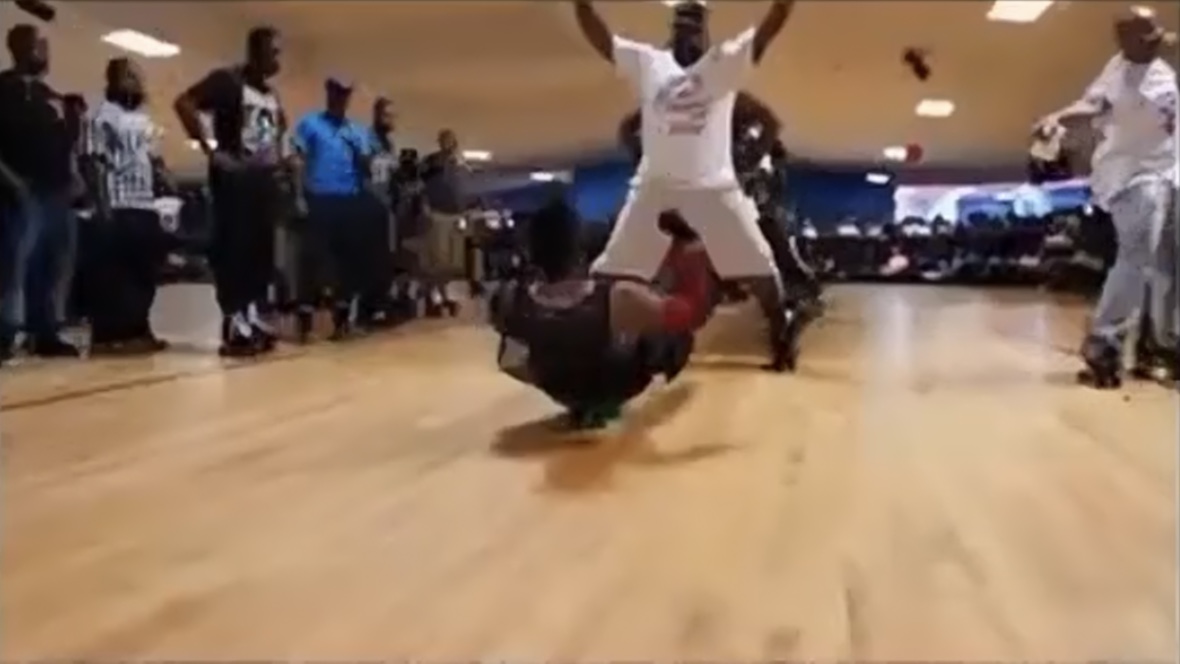
Have you watched the clip of Sydney Blaylock's skate ettiquete breakdown at the top of this page?
➡️ Watch Full Video: Skate Ettiquette Explained!
Etiquette isn’t a static notion — it responds to the moment that's unfolding before you [in real time].
Final Thought
Skate etiquette isn’t always about strickly following a set of given rules, as that won't work in every scenario. It’s more about mutual respect in motion and understanding the game. We're all here to max out on fun, and good skate etiquette helps that to happen.
When everyone is willing to take responsibility by raising their own level of awareness, sessions feel safer, smoother, and MUCH more enjoyable. Things flow well for beginners and more advanced skaters alike, creativity opens right up and community spirit strengthens.
Good etiquette doesn’t restrict skating, it maximises what eveyone [at every skill level] is able to do well — all within one shared space!
Kelly
Cranial Osteopath | Wellbeing Coach | Roller Skate Instructor
🗯️ What's been your worste skate ettiquete mis hap? Maybe you were on the receiving end! Let us know in the comments below, or leave a quick emoji resonse.