The hesitation is real when you're considering getting back into skating after some decades out. As a skate instructor who returned to skating in my mid-40s, and teaches those who are predominantly 40 plus, I often see both sides of this scenario. People are quick to tell me, “I haven’t skated since the 80s” as they introduce themselves — like I'll have my work cut out with them!
But every time I hear this, it's like music to my ears! To me this means:
Fast Track Progress.
Why? Because muscle memory is on our side.
The Big Comeback
Returning skaters have already put the work in to lay a foundation, it just takes the right conditions for those dormant skills to awaken in a way that works for them.
It usually unfolds quietly. Skates go on, we cover the basics, and then… the dots start to join. A few tentative wobbles early in the session — and then something will usually click into place for them.
As confidence starts to build, the body starts to soften a little. Returning skaters just need a few key cues to help them re-attune and kick start the reflexes whilst on eight wheels. A few key nuggets of information, safety and skill prompts, and a bit of encouragement in an atmosphere that relaxes their nerves is usually enough to tap into some kind of flow.
It’s a scenario I never get bored of, but I do get it, If you haven’t skated since the 80s, it feels like you're starting from scratch. It’s been decades afterall. Everything seems different — the skates, the environment — and you're fully aware that your body doesn’t bounce like it used to!
But here’s the thing:
You’re not starting over, you’re picking up where you left off — you just need a minute to re-group.
This is as much mindset shift as it is physical. Trust the process — and give it a proper go. Its more about overcoming your fear of falling.
Your Body Remembers More Than You Think
When you've already skated well enough as a kid, something within already understands how to make it work — balance, weight distribution, timing, coordination, spatial awareness, those subtle weight shifts as you enter a turn…
They don’t just disappear. They just get stored away. But muscle memory — or “tissue memory” — is here to do you a massive favour.
That first roll might feel rusty. Maybe even pretty shaky. Your confidence might be questionable. But underneath that hesitation is a foundation of skill waiting to wake up — like a sleeping giant!
And it can wake up much quicker than you think!
Your brain, your nervous system, your body — they’re reactivating old pathways. Movements that once took months to learn begin resurfacing over series of hours.
You’re not starting from zero. You’re remembering.
From there, it’s about building the confidence and developing the strength and conditioning to support smoother, more controlled flow.
Trust me — I did it and have not looked back since.
Adjust Your Expectations
Your maturity and awareness is advantage. You understand risk better. You’ve got patience. You’re not throwing yourself into things just to prove something. That’s not a limitation — it’s a strength.
Your progress might look different now. Maybe slower in places, but it's likely to be cleaner. More intentional and backed by new found knowledge.
You’re in this for the long game now.
You might not be trying to hit rails or throw yourself down stair sets anymore — and that’s fine, rhythm skating doesnt require that anyway.
What matters more is the feeling of:
-
Smoothing out your flow
-
Moving with the rhythm of the music
-
Expressing yourself creatively — just because you can
That’s it.
Anything beyond that is a bonus.
Start Right Where You Are
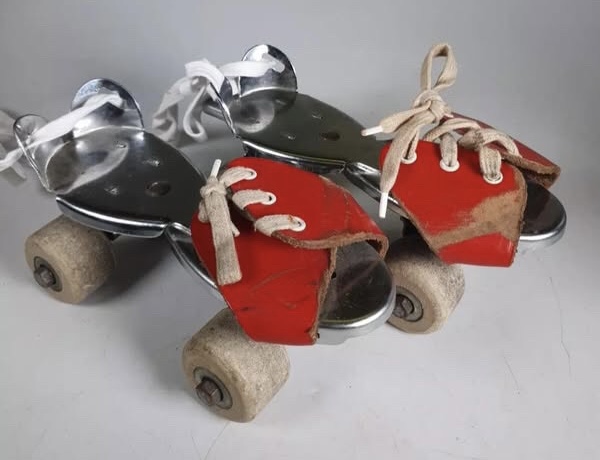
Don’t compare yourself to your 12-year-old self.
Start fresh — and build from where you are now.
Take it easy. Don't spend time putting unecessary pressure on yourself. Settle down, take your time and start to get comfortable with the very basics.
Let the muscle memory do its thing. Soon enough, you’ll begin to realise:
It never really left you.
Kelly
Cranial Osteopath | Wellbeing Coach | Roller Skate Instructor
🗯️ Have you made a roller skating comeback after decades out? Tell us in the comments below or, leave us a lil emoji response.